
 Español
 Portugues
 Pусский
 العربية
 Türk dili
 Indonesia
 Tiếng Việt
 қазақ
қазақ فارسی
فارسی українська
 беларускі
 Filipino
 o'zbek
 български
 тоҷикӣ
 kiswahili
 Монгол
 አማራ
አማራ Ilocano
Capacitor Voltage Transformer
Capacitor Voltage Transformer (CVT): Overview and Applications A Capacitor Voltage Transformer (CVT) is a specialized instrument transformer used in high-voltage power systems to step down transmission-level voltages to standardized, measurable levels suitable for metering, protection, and control applications. Combining capacitive voltage division with electromagnetic transformation, CVTs provide accurate voltage signals while offering inherent insulation benefits. Working Principle The CVT consists of two primary components: 1. Capacitive Divider: A series of high-voltage capacitors (C1 and C2) divides the input voltage (e.g., 132 kV or 400 kV) to an intermediate lower voltage (typically 5–20 kV). The divider also acts as a coupling capacitor for power-line carrier communication (PLCC) in some designs. 2. Electromagnetic Unit: The reduced voltage from the divider is fed into a conventional transformer (often with a resonant inductor) to further step it down to standardized secondary outputs (e.g., 110 V or 100 V for relays/meters). A damping circuit suppresses ferroresonance oscillations. Key Features - High Insulation: The capacitive divider inherently isolates the secondary circuits from the primary high voltage, enhancing safety. - Frequency Stability: CVTs maintain accuracy across a wide frequency range, making them suitable for dynamic grid conditions. - PLCC Integration: Some CVTs include coupling capacitors for communication signals, eliminating the need for separate devices. - Low Burden: Designed to minimize power loss, ensuring minimal impact on measurement accuracy. Applications 1. Metering: Provides precise voltage signals for energy billing and system monitoring. 2. Protection: Feeds protective relays (e.g., distance, overvoltage) with reliable voltage references for fault detection. 3. Synchronization: Ensures proper phase-matching during generator or grid interconnection. 4. Communication: Facilitates power-line carrier communication in combined CVT/PLCC units. Advantages Over Conventional VTs - Cost-Effective: More economical for ultra-high-voltage (UHV) systems compared to electromagnetic voltage transformers (VTs). - Compact Design: Lighter and smaller due to the absence of bulky insulation oil (in dry-type CVTs). - Resonance Mitigation: Built-in damping circuits prevent ferroresonance issues common in inductive VTs. Limitations - Transient Response: Slower than electromagnetic VTs during rapid voltage changes, which may affect certain protection schemes. - Temperature Sensitivity: Capacitance values can drift with temperature, though modern designs compensate for this. Conclusion CVTs are indispensable in modern high-voltage AC systems, offering a reliable, multifunctional solution for voltage measurement, protection, and communication. Their hybrid capacitive-electromagnetic design ensures efficiency, safety, and adaptability to evolving grid requirements.
Products
Category:
-
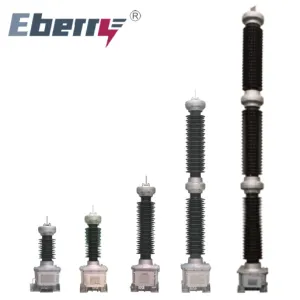
TYD Series 35-1000 Capacitor Voltage Transformer
Category: Voltage TransformerBrowse number: 1313Number:Release time: 2025-09-05 14:39:38Product Introduction:The capacitive voltage transformer is mainly used in power frequency electrical systems. It is suitable for outdoor applications with a rated voltage of 35-1000kV and a frequency of 50/60Hz. It is designed for effectively grounded and non-effectively grounded neutral systems to provide voltage signals for electrical measuring instruments, protection, and control devices. Additionally, it can function as a coupling capacitor for power line carrier communication systems.Product Features:Excellent suppression of ferroresonance: Equipped with a fast-saturation damping dev...
News
Category:
No search results found!
Case
Category:
No search results found!
Exhibition
Category:
No search results found!
Download
Category:
No search results found!
Job
Category:
No search results found!
Featured Products
No search results found!



 Phone
Phone