
 Español
 Portugues
 Pусский
 العربية
 Türk dili
 Indonesia
 Tiếng Việt
 қазақ
қазақ فارسی
فارسی українська
 беларускі
 Filipino
 o'zbek
 български
 тоҷикӣ
 kiswahili
 Монгол
 አማራ
አማራ Ilocano
low voltage winding
Low Voltage Winding: Design, Function, and Applications Low voltage winding is a critical component in electrical transformers, motors, and other electromagnetic devices. It refers to the winding that operates at a lower voltage level compared to the high voltage winding in the same system. Typically, low voltage windings are designed for voltages below 1 kV, though the exact threshold may vary depending on the application and regional standards. Design and Construction Low voltage windings are constructed using insulated copper or aluminum conductors, chosen for their excellent conductivity and cost-effectiveness. The conductors are wound around a core, which can be made of laminated steel or other magnetic materials to minimize eddy current losses. The winding configuration—whether helical, disc, or layer-type—depends on factors such as current rating, cooling requirements, and mechanical stability. Insulation is a key consideration in low voltage winding design. Materials such as enamel, paper, or polymer-based films are used to prevent short circuits between turns and layers. In some cases, varnish or resin impregnation is applied to enhance thermal and mechanical durability. Function and Performance The primary function of low voltage windings is to either step down voltage (in transformers) or facilitate energy conversion (in motors and generators). In transformers, the low voltage winding receives reduced voltage from the high voltage side, enabling safe power distribution to end-users. In motors, it interacts with the magnetic field to produce torque. Efficiency is a major performance metric. Low resistance and proper cooling (via air, oil, or forced circulation) help minimize I²R losses. Temperature rise must be controlled to prevent insulation degradation, ensuring long-term reliability. Applications Low voltage windings are widely used in: - Distribution transformers for residential and industrial power supply. - Electric motors in appliances, HVAC systems, and industrial machinery. - Power electronics such as inverters and converters. - Renewable energy systems like solar inverters and wind turbine generators. Challenges and Innovations Challenges include managing thermal stress, mechanical vibrations, and electromagnetic forces. Advances in materials (e.g., high-temperature superconductors) and automated winding techniques are improving efficiency and reducing manufacturing costs. In summary, low voltage winding plays a vital role in modern electrical systems, balancing performance, safety, and cost. Its design and optimization continue to evolve with technological advancements. (Word count: 500)
Products
Category:
-
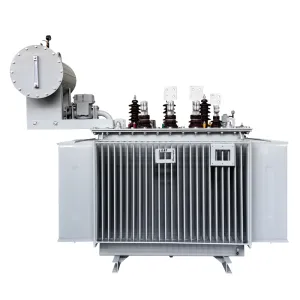
35kv Oil Immersed Power Distribution Transformer
Category: Power transformerBrowse number: 1450Number:Release time: 2025-09-05 13:11:20s11-630kva Oil-immersed transformer with conservatorThe transformer core is made of imported high-quality cold-rolled silicon steel sheet, which greatly reduces no-load loss and no-load current. The core is tightly bound to ensure the compactness and reduce noise.* The high and low voltage windings are made of oxygen-free copper. The low voltage winding of 500KVA and below is of double-layer cylinder structure, of 630kVA and above adopt double helix or four helix structure. High-voltage winding adopts multi-layer cylinder structure.* Dyn11 is used in t...
News
Category:
No search results found!
Case
Category:
No search results found!
Exhibition
Category:
No search results found!
Download
Category:
No search results found!
Job
Category:
No search results found!
Featured Products
No search results found!



 Phone
Phone